
Onhold A Shot in the Dark
Play Onhold A Shot in the Dark
Onhold A Shot in the Dark Screenshots



















Onhold A Shot in the Dark review
Master every choice, unlock all achievements, and explore every storyline in this narrative-driven experience
A Shot in the Dark stands out as a choice-driven narrative experience that puts your decisions at the center of an intricate story. This guide explores the game’s mechanics, character relationships, achievement unlocking strategies, and story branches that make each playthrough unique. Whether you’re aiming to complete every achievement, romance specific characters, or simply understand the game’s branching narrative structure, this comprehensive resource covers everything you need to maximize your experience and uncover all the game has to offer.
Understanding A Shot in the Dark: Game Mechanics and Story Structure
Ever feel like you’re just clicking through a story, and your choices are about as impactful as a whisper in a hurricane? 😮💨 I certainly have. But then I played A Shot in the Dark, and it felt like the game was listening. Every dialogue option, every silent decision, sent ripples through the narrative that came back to me hours later—sometimes as a lifeline, sometimes as a consequence I never saw coming. This isn’t just a visual novel; it’s a labyrinth of human connection and dark secrets where you hold the map. To truly master it, you need to understand its beating heart: the profound A Shot in the Dark choice system.
This guide is your flashlight in that dark. We’re going to break down exactly how your decisions forge the story, unlock (or permanently lock) character romance paths, and steer you toward one of its many gripping conclusions. Think of this as your blueprint for experiencing every heartbreaking, heartwarming, and utterly shocking moment this narrative-driven experience has to offer. 🗺️✨
How Choice-Driven Gameplay Works in A Shot in the Dark
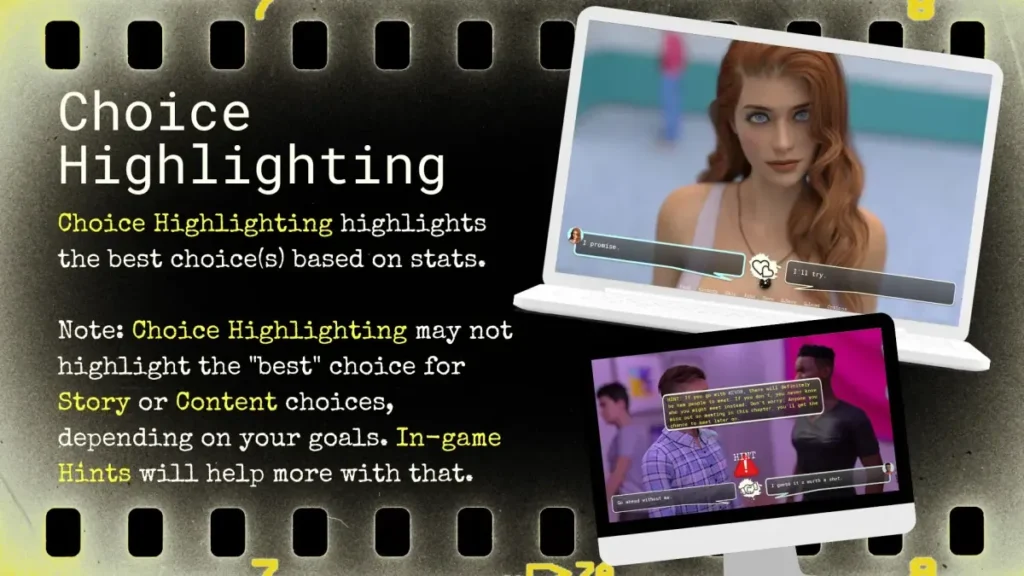
At its core, A Shot in the Dark is the purest form of narrative-driven gameplay. You are not controlling a character in a traditional sense; you are shaping a person. The game’s brilliance lies in its subtlety. You won’t see a morality meter ticking up as “Good +5” or a loyalty score for each friend. Instead, influence is woven into the fabric of every interaction.
The A Shot in the Dark choice system operates on two levels: the obvious and the invisible.
First, there are the clear, momentous decisions. These are the “Who do you save?” or “What truth do you reveal?” moments. The game often freezes, the music swells, and you know this is a fork in the road. I remember my first playthrough, facing a crucial decision about Delia’s past. I chose to confront her aggressively, seeking immediate answers. Big mistake. 🚫 That single choice closed off an entire tier of vulnerable, intimate conversations with her for the next two chapters. The game didn’t tell me I’d failed; it just made her character colder, her dialogue more guarded.
Second, and more importantly, are the micro-choices. These are the throwaway lines, the body language you choose in a non-verbal scene, or even who you choose to look at in a group conversation. This is where the relationship progression system truly lives. Complimenting Sophie’s photography might seem minor, but it adds a silent point to a hidden “trust” variable that determines whether she’ll later share a critical piece of evidence with you. The game is constantly building a profile of your protagonist’s personality—are you empathetic, skeptical, impulsive, or reserved? This profile then filters future dialogue options and character reactions.
Pro Tip: Live with your choices on a first, blind playthrough. The tension and consequence are what make A Shot in the Dark so powerful. Save the meticulous branching for later. It’s a completely different, but equally rewarding, way to play.
This layered approach means there is no single “correct” answer, only choices that are true to the character you’re building and the relationships you want to nurture. Understanding this is key to how to unlock all story branches. You’re not just picking Plot A or Plot B; you’re manually adjusting hundreds of tiny narrative gears.
Navigating Story Branches and Multiple Endings
If the choice system is the engine, then the story branching mechanics are the sprawling road network it powers. This isn’t a simple “three endings” tale. It’s a web where early, seemingly innocuous decisions can cascade into dramatically different mid-game scenarios and final outcomes.
The branching isn’t always linear. Think of it less like a tree and more like a river delta. 🌊 A choice in Chapter 1 might divert the main flow of your story, sending you down a unique narrative channel for Chapters 2 and 3. But then, a decision in Chapter 4 could merge you back into a common story thread with other players, albeit with completely different context and character dynamics. For instance, whether you side with Mai or remain neutral during an early conflict won’t just change her dialogue; it can alter the setting and participants of a major gathering in Chapter 5.
This brings us to the crown jewel of replayability: the multiple endings guide. Achieving different endings isn’t just about a final choice. It’s the culmination of your entire journey. Endings are locked behind complex conditions, often requiring:
* A specific threshold of affinity with one or more characters.
* Key pieces of information discovered (or missed) throughout the story.
* Your protagonist’s dominant personality traits by the final act.
There are endings centered on romance, on truth, on sacrifice, and on devastating failure. I was stunned to discover an ending where the central mystery remains unsolved, not because I “lost,” but because my character’s obsessive focus on one character romance path blinded them to the clues right in front of them. The game validated my roleplay with a tragic, fitting conclusion.
To explore this, you must become a master of the save file. Create manual saves at the start of each chapter and before any major decision. The story branching mechanics are deep enough that trying to re-play from the very beginning for every variation is a Herculean task. Strategic saving and loading is the intended way to see the full scope of the story.
| Character | Romance Path Available? | Key Early Decision Point | Critical Affection Requirement |
|---|---|---|---|
| Delia | Yes | Your approach to her initial secret (Empathetic vs. Confrontational) | High Trust, requires supporting her independence |
| Mai | Yes | Taking her side during the Chapter 2 argument | Proven Loyalty, often tested |
| Natalie | Yes | Accepting or declining her offer of help in Chapter 1 | Consistent Honesty and Vulnerability |
| Sara | Yes | Your reaction to her family background reveal | Respect for her boundaries, slow-build connection |
| Sophie | Yes | Showing genuine interest in her art, not just using her for info | Intellectual curiosity and emotional support |
| Alexis | No (Platonic only) | Determining your dynamic: Partner-in-crime or Voice of Reason | Mutual Respect; critical for certain story branches |
Character Relationship Systems and Romance Paths
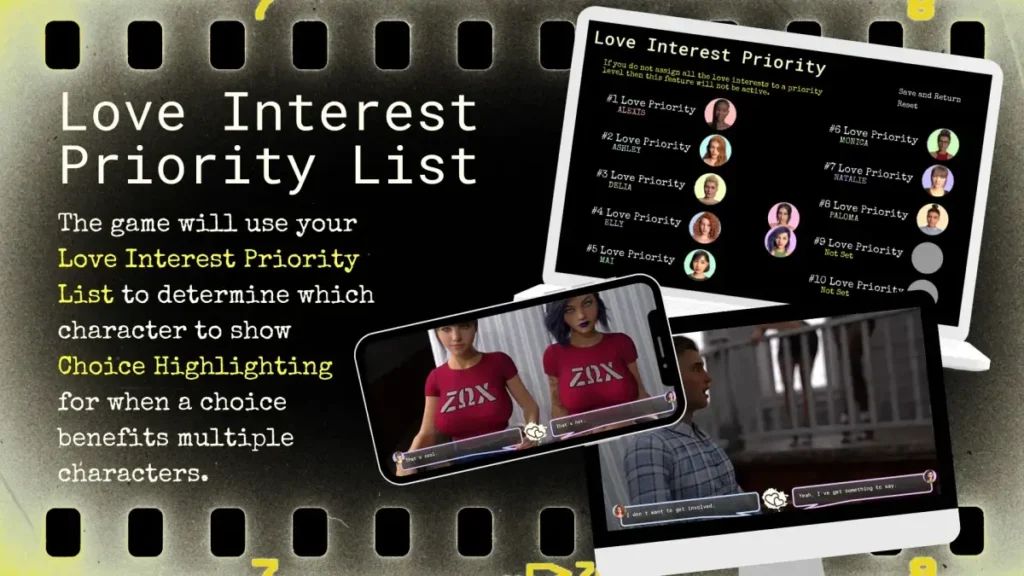
This is where A Shot in the Dark truly shines—and where most players, myself included, get deeply invested. The relationship progression system is a delicate dance. It’s not about spamming “nice” options. Each character has their own values, fears, and love languages, and the game is brutally authentic in respecting them.
Affection is rarely given as points. Instead, it’s tracked through flags and variables that represent trust, respect, intimacy, and conflict. You might have high “conflict” with Mai but even higher “respect,” leading to a passionate, argumentative but deeply loyal connection. Conversely, you could have max “comfort” with Natalie but low “passion,” locking you into a sweet, platonic friendship instead of a romance.
Let’s talk about pursuing those character romance paths. They are exclusive, demanding, and wonderfully varied. You cannot romance everyone in one run; the narrative will force choices that align your heart. Here’s a bit of personal insight from my countless hours:
- Delia’s Path 🦋 is about patience and proving you see beyond her walls. Agreeing with her constantly won’t work; she values authenticity, even if it sparks disagreement.
- Mai’s Path ⚖️ is a test of loyalty. She will put you in difficult positions to see if you’ll stand by her principles. It’s a fiery, all-or-nothing journey.
- Natalie’s Path ☕ is built on quiet moments and shared vulnerability. It’s less about grand gestures and more about consistently being a safe harbor.
- Sara’s Path 📚 requires you to be perceptive. She communicates indirectly. Noticing her small needs and respecting her space is more valuable than dramatic declarations.
- Sophie’s Path 🎨 is unlocked through shared passion. Engage deeply with her creative world, and her romance opens up as a collaborative, inspiring partnership.
Missing a character romance path isn’t failure. Often, a deep friendship unlocks its own unique story scenes and endings that are just as meaningful. Alexis, for example, has one of the most impactful narratives in the game, but it is strictly platonic. Pushing for romance where it doesn’t exist will damage that relationship.
The key is consistency. The game’s memory is long. If you flip-flop between personalities—kind to Sara one day and cold the next—relationships will stagnate or break. Your protagonist needs a core identity, and the relationship progression system rewards you for it.
FAQ: Your Mechanics Questions, Answered
Q: How many saves should I realistically use?
A: I recommend a rotating system of 5-10 manual saves. Keep one at the start of each chapter, and overwrite others as you hit major decisions. Never rely solely on autosave!Q: Can I see all content without replaying the whole game from the start?
A: Mostly, yes! This is the intended way. By loading a Chapter 1 save and making different early choices, you can access entirely new mid-game branches. However, some ending variations are so specific they may require a fresh playthrough to build the right character “profile.”Q: Are there “point of no return” warnings?
A: The game is subtle. Sometimes, a chapter title card or a shift in music is your clue. If a choice feels monumentally heavy, it probably is. That’s your cue to make a new save file.
Mastering A Shot in the Dark is about embracing its complexity. It’s a game that trusts you to handle subtlety and rewards you for paying attention. Use this guide to understand the machinery under the hood, but once you do, let yourself get lost in the dark again. Follow a new instinct, pursue a different connection, and watch as an entirely new story—with its own heartbreaks and triumphs—unfolds before you. The journey to unlock all story branches is a long one, but every path is filled with unforgettable moments waiting to be discovered. 🕯️
A Shot in the Dark delivers a compelling narrative experience where your choices genuinely matter and shape the story’s direction. By understanding the game’s choice mechanics, systematically working through achievements, and exploring different character relationships, you’ll unlock the full depth of what this narrative-driven game offers. Whether you’re pursuing a specific character romance, hunting for all achievements, or simply enjoying the branching storylines, this guide provides the roadmap to experience everything the game has to offer. Take your time with each playthrough, experiment with different dialogue choices, and don’t hesitate to reload and explore alternative paths—that’s where the true replay value of A Shot in the Dark shines.